Received via facebook message- anyone interested?:
Quentin Karmark
hello, Kurtis - I don't know if you remember me: I stopped in to see the techworks shop a number of months ago after you moved to the North end.
Anyway, I work for a company that operates a mobile wet blasting service. It's similar to sandblasting. My question is if we gave one of your members certain parameters for the design of a machine that can be operated via CNC (3-axis), would that member be able to scope out the approximate costs and resources involved?
Generally, a description of the machine is this: CNC would permit our wet blasting nozzle to remain stationary and the customer's part or vehicle would be mounted onto a rotisserie 'table' and continually moved according to a program file. It would basically be the same as a car manufacturer's painting or undercoating robot, except the nozzle would not be moving. The nozzle however could potentially change it's media rate and nozzle size.
I recently saw a technology debuted at MakerFaire called the Lynx A 3D Capture camera by which an animate object could be scanned and converted into a 3D model. I considered this model to be the basis for the CNC control (pie in the sky maybe?)
Anyway, your feedback would be appreciated
Quentin
Potentially paying project
-
FingerTech
- Posts: 319
- Joined: Tue Nov 30, 2010 10:58 pm
- Location: Saskatoon, SK.
- Contact:
Re: Potentially paying project
Quentin stopped by IRC to elaborate, I'll post the transcript below:
[13:19] <qkarmark> OK - so we use a technology (which can be found here - www.revoyrestorations.ca ) by which recycled glass suspended in water is blasted at high pressure for use in stripping paint and rust primarily.....Its basically a fancy hose attached to a large screw compressor, and our unit is on a trailer so we can offer mobile services.
[13:20] <mattf_> ok
[13:20] <qkarmark> the technology works as advertised, and is very effective, and clients are eager to use us because we can blast all auto body surfaces with no risk of harming the metal (no heat means no warping)
[13:20] <mattf_> right
[13:21] <mattf_> i think your url had a typo, this seems to work better: http://www.revoysrestorations.ca/
[13:22] <qkarmark> the problem we have are two-fold: the wet media - al thought dustless - can spray back at the operator holding the nozzle, and for us to an adequate job, we really need to be able to see the surface we're blasting: the blow back from the media can quickly obscure our vision and the protective eyewear is often covered in wet glass particles. meaning we have stop and clean our eyewear constantly
[13:22] <qkarmark> its not efficient.
[13:22] <qkarmark> oh sorry, you're correct
[13:22] <mattf_> makes sense
[13:23] <qkarmark> the other problem is that its not really safe either, because the compressor and blaster are really loud and we need eye, ear and mouth protection.
[13:23] <mattf_> right
[13:24] <qkarmark> if we had a machine to perform 80% of the blasting, it would increase productivity and lower operator costs as well, plus make things considerably safer.
[13:25] <mattf_> so, some automated way to move the nozzle relative to the the object being blasted so that you can hit all surfaces (possibley including eg underside of a car)?
[13:26] <qkarmark> i suppose one other problem is that it's easy to miss a spot and we need to inspect each part before proceeding
[13:26] <qkarmark> pretty much yes
[13:26] <@Kaldonis> So here are a couple of the hard problems I see with automating this... 1) i assume the nozzle needs to stay within a certain distance of the object being blasted, so it needs to somehow be aware of the shape of the object being blasted
[13:28] <@Kaldonis> actually that's the main one, the other big challenges I can see are based on that
[13:28] <qkarmark> there is one caviet to moving the nozzle.... it has to remain level on one axis (as in, it can't be rotated by the operator: it should remain horizontal such as the roll of an aircraft)? does that make sense? I don't really know why, but I think it has to do with the performance or longevity of the nozzle end
[13:28] <@Kaldonis> and what distance does the nozzle have to be from the surface being blasted?
[13:28] <mattf_> so, the nozzle has to remain horizontal?
[13:29] <qkarmark> yes, the ideal distance of the nozzle is roughly 10-12 inches, but it can also work just as well from 2-3 inches, its just not as efficient
[13:29] <mattf_> what about 2-3ft?
[13:29] <mattf_> 5ft?
[13:30] <qkarmark> nope... anything more than 18 inches would basically be a waste of time, due to the increasing size of the blast pattern and hence the concentration of the media
[13:30] <@Kaldonis> that's tough.
[13:31] <@Kaldonis> but i'm not an engineer, so i'll let one of them chime in
[13:31] <@thesaxmachine> herpa derp
[13:31] <Odemia> does incident angle or the media on the part matter, I notice in the picutre that they are angling it on, is that nedded or just to keep blas back down?
[13:32] <mattf_> ^^
[13:37] <qkarmark> angling sort of helps to avoid blow back so the expended media is is moving away from the operator, I don't feel that angling is necessary for effectiveness tho
[13:38] <qkarmark> however, it doesn'r really matter if you angle it or not when working on complicated surfaces, because the ricochete of the media invariably results in blow back to the operator
[13:40] <mattf_> qkarmark: it sounds to me like the path would be a function of the object being stripped (eg car) You would either need to spend a lot of time programming in a path, or have some way to automate it (eg 3d scan the object, and automagically calculate a path the provides complete coverage)
[13:40] <qkarmark> exactly, mattf
[13:40] <mattf_> qkarmark: sounds like a very complicated and expensive problem
[13:41] <RevEng> Or, if you have sensors, you could track how far you are from the surface and try to maintain a constant distance as you mov across it
[13:41] <RevEng> But any kind of sensors are going to hate that environment
[13:41] <qkarmark> in envision the use of a camera that can convert a real object into a 3D model, and then the model would then be used to calculate the path
[13:41] <mattf_> i wonder if it would be smarter to provide an effective, flexible remote operated blaster
[13:41] <RevEng> mattf: I was thinking the same
[13:42] <@Kaldonis> that would be an niteresting approach
[13:42] <guppy> +1 on that idea
[13:42] <@Kaldonis> but yeah, a remote controlled system would be much simpler
[13:42] <mattf_> remove the problems you listed above re noise/visibility etc
[13:42] <mattf_> but keep the flexibility of manual (remote) control
[13:42] <qkarmark> ok.. by remote you mean the blast nozzle and the operator are not in the same vicinity?
[13:42] <mattf_> correct
[13:42] <@Kaldonis> well, you could be like 10 feet away or something
[13:43] <RevEng> Visibility might still be a bit tricky, since the operator would be some distance away from the point of view, so he'd either be looking from far away or would need a camera that itself would be subject to blowback
[13:43] <qkarmark> OK... there is still a problem with that: the operator still needs to be able to see what is being blasted, whether they're looking through eye wear or a remote camera
[13:43] <@Kaldonis> for sure
[13:43] <guppy> if you are farther back, your issues with blowback might not be a big deal
[13:43] <RevEng> using a camera does also allow for wipers, so that's handy
[13:44] <guppy> I imagine even 5 feet back and off to the side it's reduced a lot
[13:44] <mattf_> qkarmark: you said the visibility problem was with stuff on your face shield, or is it because you can't see through the spray?
[13:44] <qkarmark> vision is highly important... especially lighitng conditions
[13:44] <mattf_> you could add lights to the robot
[13:44] <qkarmark> if it is sunny for example, there are many shadows and its easy to miss something
[13:44] <qkarmark> yes lights would be helpful
[13:46] <@Kaldonis> is this something you're looking to have built for you or something you'd like help building yourself?
[13:46] <qkarmark> agreed, if the operator is perhaps 5 feet away from the blasted surface the blowback would be reduced, but some surfaces are complicated and the operator would need to pause and find 'hidden' or tough to reach areas quite frequently
[13:46] <mattf_> all these problems are small relative to building an automated 4-6dimensional robotic vehicle rotisserie with integrated 3d scanning and path calculation (as well as quality control feedback)
[13:47] <qkarmark> we have fabrication , just not tech resources
[13:47] <Odemia> Can you give and example one of these complicated surfaces, I all I am picturing right now is door panels
[13:48] <@thesaxmachine> motorbike
[13:48] <@thesaxmachine> regular bike
[13:48] <@thesaxmachine> sort of thing?
[13:48] <mattf_> utility trailer
[13:49] <qkarmark> a vehicle rim (many shapes and folds), the underside of a engine hood (bracing and folds), and basically an interior (convex) surface such as the door jams or wheel wells
[13:49] <guppy> oh, the interior of things
[13:49] <@Kaldonis> yikes
[13:49] <guppy> that would be hard
[13:49] <mattf_> imagine the flexility required to automatically blast this: http://www.revoysrestorations.ca/wp-con ... 40x160.jpg
[13:49] <@Kaldonis> so we're talking about getting inside of objects too?
[13:50] <guppy> question:
[13:50] <guppy> can you buy such a rig to do this already?
[13:50] <guppy> if not, there's a reason
[13:50] <guppy>
[13:50] <qkarmark> http://mbworld.org/forums/attachments/w ... g_4188.jpg
[13:52] <qkarmark> http://blogs.getty.edu/iris/files/2012/ ... orvair.jpg
[13:52] <mattf_> i think mechanically, you would need a full robotic arm together with a 2D rotisserie platform
[13:52] <qkarmark> http://www.rustterminator.com/images/ru ... _block.gif
[13:52] <qkarmark> there are rotisseries for working on car bodies... for example assembly or repair
[13:52] <mattf_> qkarmark: what is the upper limit that this would be financially viable for you?
[13:52] <qkarmark> there are rotisseries for working on car bodies... for example assembly or repair
[13:52] <qkarmark> http://www.competitionplus.com/2005_02_ ... rie_01.jpg
[13:54] <Odemia> K, yeah. Like mattf_ I am not seeing a 3 axis machine being capable of a lot of these parts even 3 axis + 90degrees of roll can't actually do an intricate convex shape properly
[13:55] <RevEng> And 3D scanning and modelling is going to be almost impossible
[13:55] <@Kaldonis> especially if you're needing to do interiors of objects
[13:56] <qkarmark> I don't envision a robotic device being able to do every application nor doing it terribly complete, but if it can reduce 80-90% of operator man hours that would be an advantage
[13:56] <RevEng> But I could using a rotisserie and a 5D machine to do it
[13:56] <RevEng> 3D lateral movement plus pitch and roll of the tool
[13:56] <@Kaldonis> tool has to remain horizontal I thought?
[13:56] <qkarmark> ya... that sounds rather suitable Rev
[13:57] <mattf_> I think at least $50k in the software development just to calculate the movement path
[13:57] <guppy> qkarmark: you are going to need some $$
[13:57] <qkarmark> no, the nozzle can tilt up and down, just not twist (roll??)
[13:57] <RevEng> Sorry, pitch and yaw. Yeah, roll is what wouldn't be allowed
[13:57] <@Kaldonis> ok
[13:57] <RevEng> (as in barrel roll)
[13:58] <RevEng> There's open source software that can run a machine like that, but as mattf pointed out, calculating the tool path is tricky
[13:58] <qkarmark> correct
[13:58] <mattf_> RevEng: yeah, i think 5D would be the minimum.... until you need to go inside a surface (eg car interior)
[13:59] <RevEng> Yeah, you'd probably want multiple joints on an arm if you needed to extend deep within an object
[13:59] <RevEng> Kinda like a robotic welder arm
[13:59] <qkarmark> interior of cars are not nearly as common
[13:59] <mattf_> RevEng: that's my thought. Use one of those as a starting point
[13:59] <RevEng> Now, they do make machines like that already. You just need to put a tool on the end.
[14:00] <RevEng> As for controlling them, I think most are programmed manually. The operator manually runs it through the operation, recording the movements, then the robot repeats them.
[14:00] <RevEng> Less useful in this case
[14:00] <qkarmark> but also dont need as a discerning result compared to the exterior body panels.. .car interiors are basically a rust problem so that repairs can be made, not actually painted sanded etc
[14:01] <Odemia> qkarmark: how hard is it going to be to shiled motors etc from the media?
[14:02] <Odemia> I am assuming they will need complete enclosure to be safe from splatter
[14:03] <RevEng> I didn't see the original question. Are you looking for ideas or somebody to help you design/build it?
[14:05] <qkarmark> do you mean motors that operate the robot etc?
[14:06] <Odemia> yeah, just generally thinkging about the media flying around and other implications it might have
[14:07] <qkarmark> Hi, RevEng... Im looking for someone to let me know how much effort (and potentially $$) would be involved in building a robot device to aid in blasting wet media onto complicated surfaces, but any surface for that matter
[14:08] <RevEng> Well, I don't know that I can answer the question, but I can suggest questions that will help you get closer to the answer.
[14:08] <qkarmark> blow back with the wet media causes visibility problems, and complicated surfaces are not easy to see in the first place, meaning there is lots of inspection needed (starting/stopping)
[14:08] <qkarmark> no problem... dialogue is valuable from any perspective
[14:08] <RevEng> What level of quality do you need? Is this just a prototype for proof of concept or will it need to be put into production?
[14:09] <qkarmark> due to the blast pattern of the nozzle, one could expect an overlap of roughly 1 inch to ensure thoroughness
[14:10] <qkarmark> we can easily control media rate and pressure, as well as distance from the blasted surface. what we cant control is all the frickin glass particles flying around and making it hard to see what is 16 inches from our face LOL
[14:11] <qkarmark> because they're wet, they stick to our eyewear quite easily
[14:11] <qkarmark> and we effectively blilnd
[14:11] <RevEng> My simplest suggestion is wipers
[14:12] <mattf_> maybe a shield around the nozzle to redirect blowback (like a windshield)
[14:12] <RevEng> If visibility is required for any person or machine, avoiding and clearing spray will be necessary no matter what
[14:12] <qkarmark> the wipers would keep the eyewear cleaner to a degree, but imagine standing in a duststorm and not being able to see someone two feet away from you
[14:12] <qkarmark> not if the visibility is achieved via a programmed path
[14:13] <qkarmark> take picture, have it in memory, and the robot knows where the surface is....
[14:13] <qkarmark> it doesn't have to see when itis working
[14:14] <RevEng> That's certainly an option. Unfortunately, it's a very difficult one.
[14:15] <RevEng> If the operator could run it once without running the tool, just programming the path it should take, that would remove a lot of complication.
[14:15] <@Kaldonis> sounds easy, but I expect the software for that would easily cost more than the mechanical components
[14:15] <RevEng> Kaldonis: Doesn't at all sound easy to me. Computer vision and modelling is an active area of research, not a solved problem.
[14:15] <qkarmark> I don't anticipate making a robot that can work with any and all applications at the outset, but indeed if the machine is able to perform lots of tasks without operator intervertion, we're saving paying man hour wages, liability costs to the operator, as well as downtime due to inspection and giving the operator proper visibility
[14:15] <@Kaldonis> No I meant that it sounds easier than it is
[14:16] <RevEng> Building a machine that could go back and forth over a relatively flat surface would be quite simple
[14:16] <RevEng> All you'd have to do is mark the corners of the area and it would immediately know what path to take
[14:16] <RevEng> As soon as you add different depths, it's trickier. And if you have to go around corners, that's a ton more work.
[14:16] <RevEng> Fully automating it with computer vision and modelling is another huge step more.
[14:17] <mattf_> ^^
[14:17] <RevEng> So perhaps you could get the machine to make the first, rough pass, then let the operator fill in the details.
[14:17] <qkarmark> yes, that is potentially an option
[14:17] <RevEng> Is over-exposing the surface a concern?
[14:17] <qkarmark> nope
[14:18] <RevEng> You could probably get somewhat concave surfaces just by making multiple passes with the tool at different angles
[14:18] <RevEng> Without any real knowledge of the surface itself
[14:18] <qkarmark> you can hold the nozzle in one spot for as long as you want and all it will do is keep removing metal... but our blast pot only has a run time of 15 minutes so it would run out of media before that happened
[14:18] <RevEng> I suspect you don't want to remove too much metal though
[14:19] <qkarmark> that's entirely possible Rev
---
I'm going to stop transcribing now, as I think the project has been adequately described.
[13:19] <qkarmark> OK - so we use a technology (which can be found here - www.revoyrestorations.ca ) by which recycled glass suspended in water is blasted at high pressure for use in stripping paint and rust primarily.....Its basically a fancy hose attached to a large screw compressor, and our unit is on a trailer so we can offer mobile services.
[13:20] <mattf_> ok
[13:20] <qkarmark> the technology works as advertised, and is very effective, and clients are eager to use us because we can blast all auto body surfaces with no risk of harming the metal (no heat means no warping)
[13:20] <mattf_> right
[13:21] <mattf_> i think your url had a typo, this seems to work better: http://www.revoysrestorations.ca/
[13:22] <qkarmark> the problem we have are two-fold: the wet media - al thought dustless - can spray back at the operator holding the nozzle, and for us to an adequate job, we really need to be able to see the surface we're blasting: the blow back from the media can quickly obscure our vision and the protective eyewear is often covered in wet glass particles. meaning we have stop and clean our eyewear constantly
[13:22] <qkarmark> its not efficient.
[13:22] <qkarmark> oh sorry, you're correct
[13:22] <mattf_> makes sense
[13:23] <qkarmark> the other problem is that its not really safe either, because the compressor and blaster are really loud and we need eye, ear and mouth protection.
[13:23] <mattf_> right
[13:24] <qkarmark> if we had a machine to perform 80% of the blasting, it would increase productivity and lower operator costs as well, plus make things considerably safer.
[13:25] <mattf_> so, some automated way to move the nozzle relative to the the object being blasted so that you can hit all surfaces (possibley including eg underside of a car)?
[13:26] <qkarmark> i suppose one other problem is that it's easy to miss a spot and we need to inspect each part before proceeding
[13:26] <qkarmark> pretty much yes
[13:26] <@Kaldonis> So here are a couple of the hard problems I see with automating this... 1) i assume the nozzle needs to stay within a certain distance of the object being blasted, so it needs to somehow be aware of the shape of the object being blasted
[13:28] <@Kaldonis> actually that's the main one, the other big challenges I can see are based on that
[13:28] <qkarmark> there is one caviet to moving the nozzle.... it has to remain level on one axis (as in, it can't be rotated by the operator: it should remain horizontal such as the roll of an aircraft)? does that make sense? I don't really know why, but I think it has to do with the performance or longevity of the nozzle end
[13:28] <@Kaldonis> and what distance does the nozzle have to be from the surface being blasted?
[13:28] <mattf_> so, the nozzle has to remain horizontal?
[13:29] <qkarmark> yes, the ideal distance of the nozzle is roughly 10-12 inches, but it can also work just as well from 2-3 inches, its just not as efficient
[13:29] <mattf_> what about 2-3ft?
[13:29] <mattf_> 5ft?
[13:30] <qkarmark> nope... anything more than 18 inches would basically be a waste of time, due to the increasing size of the blast pattern and hence the concentration of the media
[13:30] <@Kaldonis> that's tough.
[13:31] <@Kaldonis> but i'm not an engineer, so i'll let one of them chime in
[13:31] <@thesaxmachine> herpa derp
[13:31] <Odemia> does incident angle or the media on the part matter, I notice in the picutre that they are angling it on, is that nedded or just to keep blas back down?
[13:32] <mattf_> ^^
[13:37] <qkarmark> angling sort of helps to avoid blow back so the expended media is is moving away from the operator, I don't feel that angling is necessary for effectiveness tho
[13:38] <qkarmark> however, it doesn'r really matter if you angle it or not when working on complicated surfaces, because the ricochete of the media invariably results in blow back to the operator
[13:40] <mattf_> qkarmark: it sounds to me like the path would be a function of the object being stripped (eg car) You would either need to spend a lot of time programming in a path, or have some way to automate it (eg 3d scan the object, and automagically calculate a path the provides complete coverage)
[13:40] <qkarmark> exactly, mattf
[13:40] <mattf_> qkarmark: sounds like a very complicated and expensive problem
[13:41] <RevEng> Or, if you have sensors, you could track how far you are from the surface and try to maintain a constant distance as you mov across it
[13:41] <RevEng> But any kind of sensors are going to hate that environment
[13:41] <qkarmark> in envision the use of a camera that can convert a real object into a 3D model, and then the model would then be used to calculate the path
[13:41] <mattf_> i wonder if it would be smarter to provide an effective, flexible remote operated blaster
[13:41] <RevEng> mattf: I was thinking the same
[13:42] <@Kaldonis> that would be an niteresting approach
[13:42] <guppy> +1 on that idea
[13:42] <@Kaldonis> but yeah, a remote controlled system would be much simpler
[13:42] <mattf_> remove the problems you listed above re noise/visibility etc
[13:42] <mattf_> but keep the flexibility of manual (remote) control
[13:42] <qkarmark> ok.. by remote you mean the blast nozzle and the operator are not in the same vicinity?
[13:42] <mattf_> correct
[13:42] <@Kaldonis> well, you could be like 10 feet away or something
[13:43] <RevEng> Visibility might still be a bit tricky, since the operator would be some distance away from the point of view, so he'd either be looking from far away or would need a camera that itself would be subject to blowback
[13:43] <qkarmark> OK... there is still a problem with that: the operator still needs to be able to see what is being blasted, whether they're looking through eye wear or a remote camera
[13:43] <@Kaldonis> for sure
[13:43] <guppy> if you are farther back, your issues with blowback might not be a big deal
[13:43] <RevEng> using a camera does also allow for wipers, so that's handy
[13:44] <guppy> I imagine even 5 feet back and off to the side it's reduced a lot
[13:44] <mattf_> qkarmark: you said the visibility problem was with stuff on your face shield, or is it because you can't see through the spray?
[13:44] <qkarmark> vision is highly important... especially lighitng conditions
[13:44] <mattf_> you could add lights to the robot
[13:44] <qkarmark> if it is sunny for example, there are many shadows and its easy to miss something
[13:44] <qkarmark> yes lights would be helpful
[13:46] <@Kaldonis> is this something you're looking to have built for you or something you'd like help building yourself?
[13:46] <qkarmark> agreed, if the operator is perhaps 5 feet away from the blasted surface the blowback would be reduced, but some surfaces are complicated and the operator would need to pause and find 'hidden' or tough to reach areas quite frequently
[13:46] <mattf_> all these problems are small relative to building an automated 4-6dimensional robotic vehicle rotisserie with integrated 3d scanning and path calculation (as well as quality control feedback)
[13:47] <qkarmark> we have fabrication , just not tech resources
[13:47] <Odemia> Can you give and example one of these complicated surfaces, I all I am picturing right now is door panels
[13:48] <@thesaxmachine> motorbike
[13:48] <@thesaxmachine> regular bike
[13:48] <@thesaxmachine> sort of thing?
[13:48] <mattf_> utility trailer
[13:49] <qkarmark> a vehicle rim (many shapes and folds), the underside of a engine hood (bracing and folds), and basically an interior (convex) surface such as the door jams or wheel wells
[13:49] <guppy> oh, the interior of things
[13:49] <@Kaldonis> yikes
[13:49] <guppy> that would be hard
[13:49] <mattf_> imagine the flexility required to automatically blast this: http://www.revoysrestorations.ca/wp-con ... 40x160.jpg

[13:49] <@Kaldonis> so we're talking about getting inside of objects too?
[13:50] <guppy> question:
[13:50] <guppy> can you buy such a rig to do this already?
[13:50] <guppy> if not, there's a reason
[13:50] <guppy>
[13:50] <qkarmark> http://mbworld.org/forums/attachments/w ... g_4188.jpg

[13:52] <qkarmark> http://blogs.getty.edu/iris/files/2012/ ... orvair.jpg
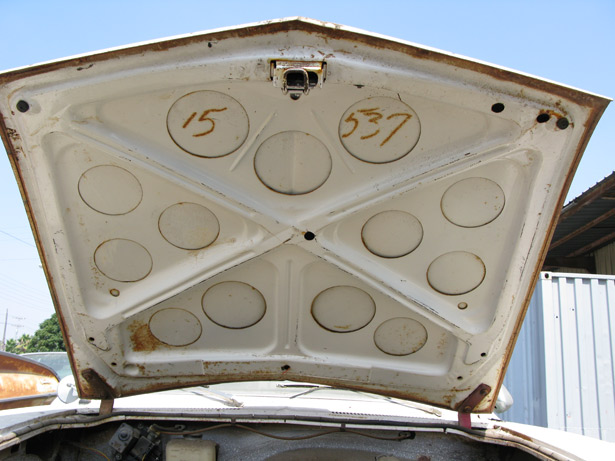
[13:52] <mattf_> i think mechanically, you would need a full robotic arm together with a 2D rotisserie platform
[13:52] <qkarmark> http://www.rustterminator.com/images/ru ... _block.gif

[13:52] <qkarmark> there are rotisseries for working on car bodies... for example assembly or repair
[13:52] <mattf_> qkarmark: what is the upper limit that this would be financially viable for you?
[13:52] <qkarmark> there are rotisseries for working on car bodies... for example assembly or repair
[13:52] <qkarmark> http://www.competitionplus.com/2005_02_ ... rie_01.jpg

[13:54] <Odemia> K, yeah. Like mattf_ I am not seeing a 3 axis machine being capable of a lot of these parts even 3 axis + 90degrees of roll can't actually do an intricate convex shape properly
[13:55] <RevEng> And 3D scanning and modelling is going to be almost impossible
[13:55] <@Kaldonis> especially if you're needing to do interiors of objects
[13:56] <qkarmark> I don't envision a robotic device being able to do every application nor doing it terribly complete, but if it can reduce 80-90% of operator man hours that would be an advantage
[13:56] <RevEng> But I could using a rotisserie and a 5D machine to do it
[13:56] <RevEng> 3D lateral movement plus pitch and roll of the tool
[13:56] <@Kaldonis> tool has to remain horizontal I thought?
[13:56] <qkarmark> ya... that sounds rather suitable Rev
[13:57] <mattf_> I think at least $50k in the software development just to calculate the movement path
[13:57] <guppy> qkarmark: you are going to need some $$
[13:57] <qkarmark> no, the nozzle can tilt up and down, just not twist (roll??)
[13:57] <RevEng> Sorry, pitch and yaw. Yeah, roll is what wouldn't be allowed
[13:57] <@Kaldonis> ok
[13:57] <RevEng> (as in barrel roll)
[13:58] <RevEng> There's open source software that can run a machine like that, but as mattf pointed out, calculating the tool path is tricky
[13:58] <qkarmark> correct
[13:58] <mattf_> RevEng: yeah, i think 5D would be the minimum.... until you need to go inside a surface (eg car interior)
[13:59] <RevEng> Yeah, you'd probably want multiple joints on an arm if you needed to extend deep within an object
[13:59] <RevEng> Kinda like a robotic welder arm
[13:59] <qkarmark> interior of cars are not nearly as common
[13:59] <mattf_> RevEng: that's my thought. Use one of those as a starting point
[13:59] <RevEng> Now, they do make machines like that already. You just need to put a tool on the end.
[14:00] <RevEng> As for controlling them, I think most are programmed manually. The operator manually runs it through the operation, recording the movements, then the robot repeats them.
[14:00] <RevEng> Less useful in this case
[14:00] <qkarmark> but also dont need as a discerning result compared to the exterior body panels.. .car interiors are basically a rust problem so that repairs can be made, not actually painted sanded etc
[14:01] <Odemia> qkarmark: how hard is it going to be to shiled motors etc from the media?
[14:02] <Odemia> I am assuming they will need complete enclosure to be safe from splatter
[14:03] <RevEng> I didn't see the original question. Are you looking for ideas or somebody to help you design/build it?
[14:05] <qkarmark> do you mean motors that operate the robot etc?
[14:06] <Odemia> yeah, just generally thinkging about the media flying around and other implications it might have
[14:07] <qkarmark> Hi, RevEng... Im looking for someone to let me know how much effort (and potentially $$) would be involved in building a robot device to aid in blasting wet media onto complicated surfaces, but any surface for that matter
[14:08] <RevEng> Well, I don't know that I can answer the question, but I can suggest questions that will help you get closer to the answer.
[14:08] <qkarmark> blow back with the wet media causes visibility problems, and complicated surfaces are not easy to see in the first place, meaning there is lots of inspection needed (starting/stopping)
[14:08] <qkarmark> no problem... dialogue is valuable from any perspective
[14:08] <RevEng> What level of quality do you need? Is this just a prototype for proof of concept or will it need to be put into production?
[14:09] <qkarmark> due to the blast pattern of the nozzle, one could expect an overlap of roughly 1 inch to ensure thoroughness
[14:10] <qkarmark> we can easily control media rate and pressure, as well as distance from the blasted surface. what we cant control is all the frickin glass particles flying around and making it hard to see what is 16 inches from our face LOL
[14:11] <qkarmark> because they're wet, they stick to our eyewear quite easily
[14:11] <qkarmark> and we effectively blilnd
[14:11] <RevEng> My simplest suggestion is wipers
[14:12] <mattf_> maybe a shield around the nozzle to redirect blowback (like a windshield)
[14:12] <RevEng> If visibility is required for any person or machine, avoiding and clearing spray will be necessary no matter what
[14:12] <qkarmark> the wipers would keep the eyewear cleaner to a degree, but imagine standing in a duststorm and not being able to see someone two feet away from you
[14:12] <qkarmark> not if the visibility is achieved via a programmed path
[14:13] <qkarmark> take picture, have it in memory, and the robot knows where the surface is....
[14:13] <qkarmark> it doesn't have to see when itis working
[14:14] <RevEng> That's certainly an option. Unfortunately, it's a very difficult one.
[14:15] <RevEng> If the operator could run it once without running the tool, just programming the path it should take, that would remove a lot of complication.
[14:15] <@Kaldonis> sounds easy, but I expect the software for that would easily cost more than the mechanical components
[14:15] <RevEng> Kaldonis: Doesn't at all sound easy to me. Computer vision and modelling is an active area of research, not a solved problem.
[14:15] <qkarmark> I don't anticipate making a robot that can work with any and all applications at the outset, but indeed if the machine is able to perform lots of tasks without operator intervertion, we're saving paying man hour wages, liability costs to the operator, as well as downtime due to inspection and giving the operator proper visibility
[14:15] <@Kaldonis> No I meant that it sounds easier than it is
[14:16] <RevEng> Building a machine that could go back and forth over a relatively flat surface would be quite simple
[14:16] <RevEng> All you'd have to do is mark the corners of the area and it would immediately know what path to take
[14:16] <RevEng> As soon as you add different depths, it's trickier. And if you have to go around corners, that's a ton more work.
[14:16] <RevEng> Fully automating it with computer vision and modelling is another huge step more.
[14:17] <mattf_> ^^
[14:17] <RevEng> So perhaps you could get the machine to make the first, rough pass, then let the operator fill in the details.
[14:17] <qkarmark> yes, that is potentially an option
[14:17] <RevEng> Is over-exposing the surface a concern?
[14:17] <qkarmark> nope
[14:18] <RevEng> You could probably get somewhat concave surfaces just by making multiple passes with the tool at different angles
[14:18] <RevEng> Without any real knowledge of the surface itself
[14:18] <qkarmark> you can hold the nozzle in one spot for as long as you want and all it will do is keep removing metal... but our blast pot only has a run time of 15 minutes so it would run out of media before that happened
[14:18] <RevEng> I suspect you don't want to remove too much metal though
[14:19] <qkarmark> that's entirely possible Rev
---
I'm going to stop transcribing now, as I think the project has been adequately described.